
The Useful Idiots in The Implementation of Oklahoma School-Based Health Centers
Deborah Campbell 10.23.2025

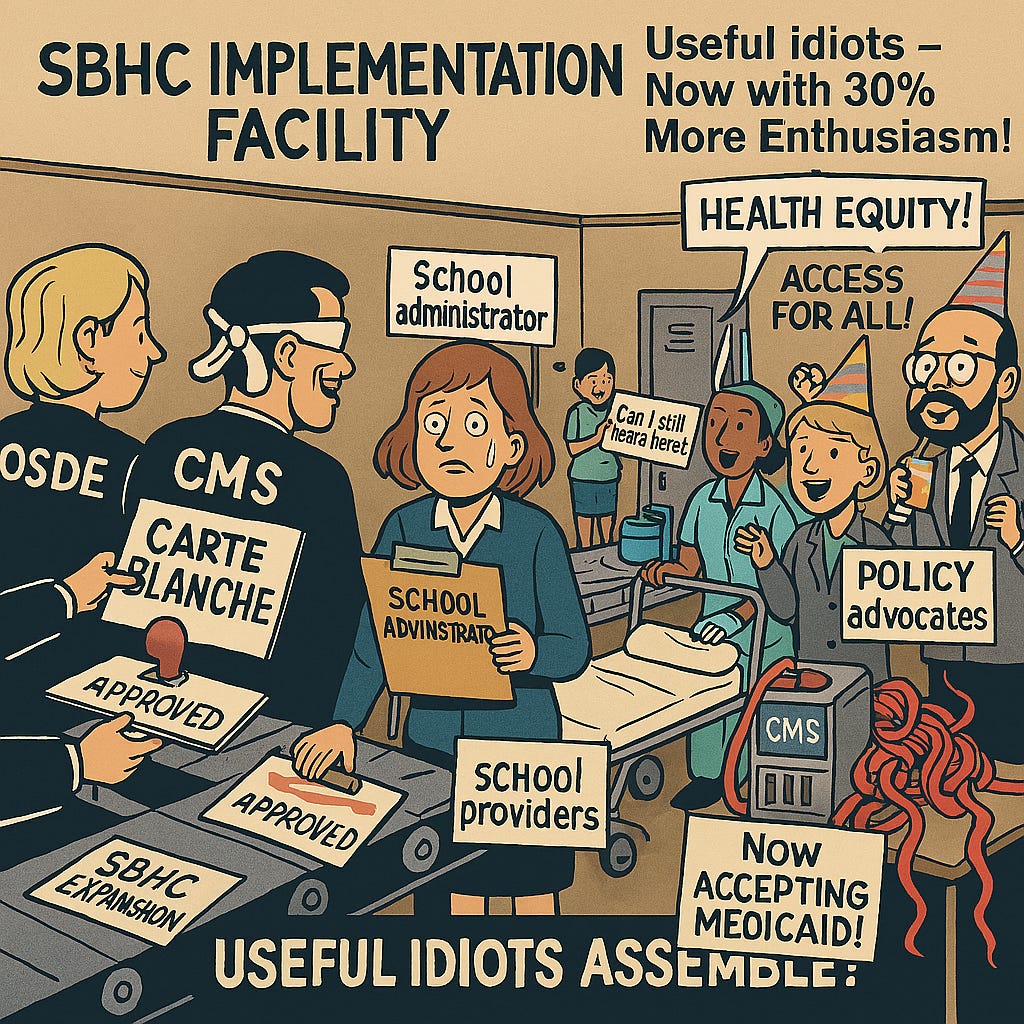
The Oklahoma Health Care Authority (OHCA), the Oklahoma State Department of Education (OSDE), and the State Superintendent unlawfully and actively supported the expansion of school-based health services, particularly through Medicaid-funded programs into K-12 school-based health centers (SBHC), but their roles reflect strategic policy alignment rather than naivety.
Oklahoma’s school-based health centers (SBHCs) implementation includes the following helpful idiots:
• School Administrators: They play a critical role in planning and implementing SBHCs, ensuring that health services are integrated into the school environment.
• Healthcare Providers: These professionals are essential for providing comprehensive health services, including primary care, preventive health, and mental health services.
• Community Members: Collaborating with community organizations and stakeholders is vital for the success of SBHCs, as it enhances access to quality healthcare for children and adolescents.
• Policy Advocates and state legislators: These stakeholders collectively contribute to the effective implementation of SBHCs, promoting the health and well-being of students in Oklahoma.
Who’s Behind the Push?
OHCA and OSDE jointly secured a $2.5 million federal grant from the Centers for Medicare & Medicaid Services (CMS) to expand school-based services infrastructure (never audited).
The State Superintendent of Public Instruction approved the grants and contracted partnerships.
Since Superintendent Joy Hofmeister’s tenure, Oklahoma has secured at least $39.3 million in funding related to school-based health services and mental health infrastructure. Here’s a breakdown of the major funding streams tied to SBHC (School-Based Health Centers) and related initiatives:
Major Funding Secured Since Hofmeister:
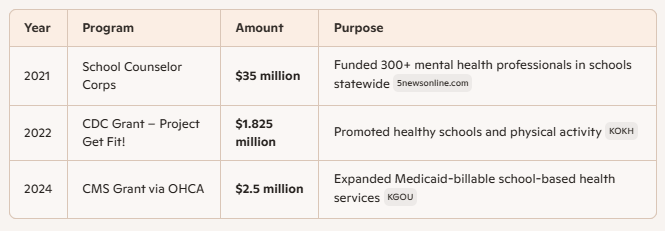
What these funds supported:
Mental health access: The Counselor Corps placed licensed therapists, social workers, and counselors directly in schools.
Preventive care: The CMS grant supports services like behavioral health, physical therapy, and occupational therapy for Medicaid-eligible students.
Infrastructure: These grants helped build the administrative and billing systems needed to sustain SBHCs long-term.
Superintendent Hofffmeister’s role in the unlawful expansion of school-based services and the implementation of SBHC:
As State Superintendent, Hofmeister was instrumental in launching the Counselor Corps and securing CDC funding for health initiatives.
Her administration laid the groundwork for OHCA and OSDE to pursue federal Medicaid expansion grants in 2024.
During Superintendent Walters tenure, The Oklahoma State Department of Education (OSDE) received the $2.5 million federal grant for school-based health centers (SBHC) on July 23, 2024. This grant was awarded through a partnership between the Oklahoma Health Care Authority (OHCA) and OSDE, funded by the Centers for Medicare and Medicaid Services (CMS). The three-year grant aims to enhance the infrastructure for school-based services (SBS) across Oklahoma, particularly those that are Medicaid-compensable. These services include preventive care, behavioral health, and therapies provided to students in school settings, especially those with Individualized Education Programs (IEPs).
For students protected under the Individuals with Disabilities Education Act (I.D.E.A.), OSDE and OHCA include “therapies” such as speech-language, occupational, physical, and mental health under Medicaid-funded SBHC because the federal register and I.D.E.A. explicitly define “therapies” as medical—not educationally necessary. According to I.D.E.A. it is unlawful to use an I.E.P. for medical services.
The $2.5 million federal grant is part of a broader $50 million initiative by CMS to help states expand access to critical health services for children in schools, made possible by the Bipartisan Safer Communities Act.
OSDE and local school districts fail to provide parents INFORMED CONSENT!
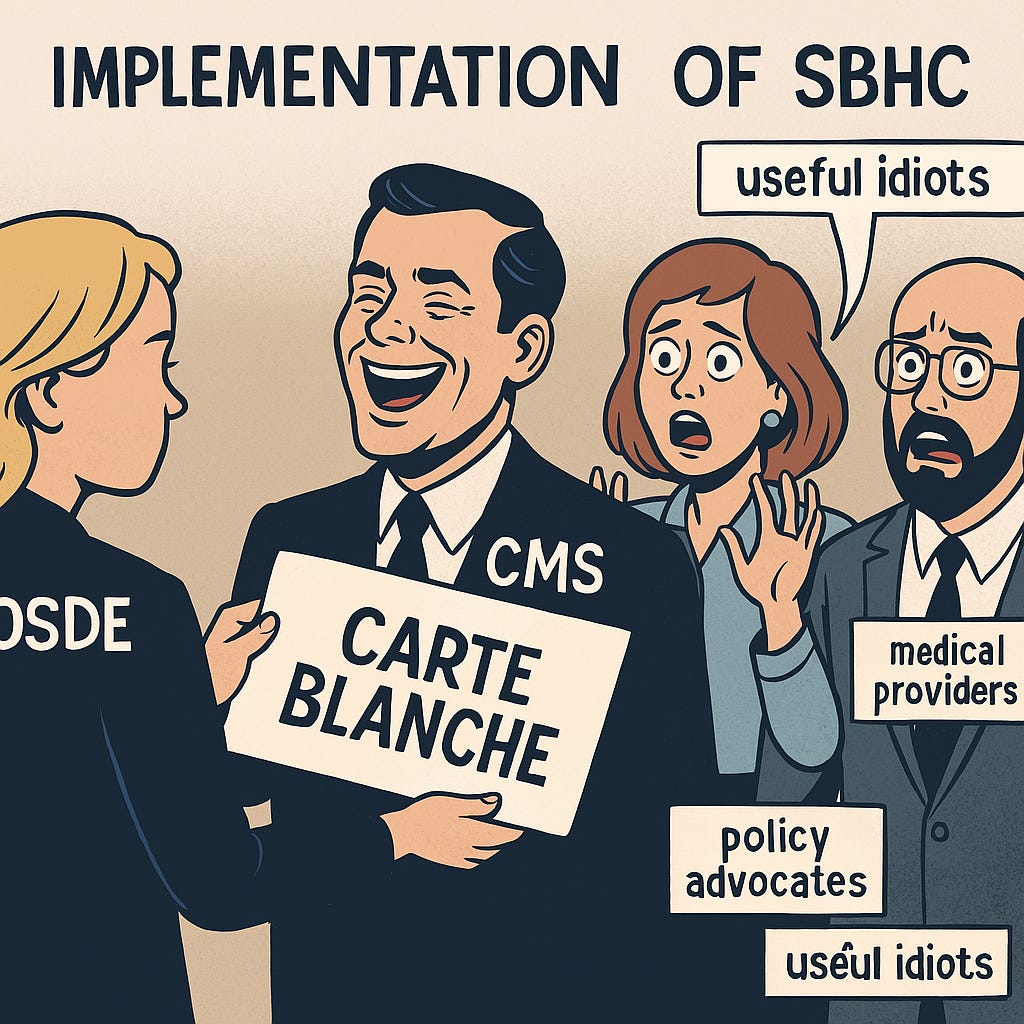
In the context of parents enrolling their children in the Medicaid funded SBHC. When a parent signs a generic SBHC consent form, you’re giving complete freedom or unrestricted power to the medical providers and medical staff to make decisions, test, and treat the minor child without your presence-violates medical ethics.
What is “informed” parental consent?The legal definition for “consent informed” contains five elements:
Relevant facts
Relevant risks
Available alternatives
The decision is made with a complete understanding of the situation.
Allowing for a knowledgeable, voluntary, and uncoerced choice.
Strategic or “Useful Idiots”?
The term “useful idiot” suggests manipulation or blind allegiance—but that label doesn’t fit here. The actions of OHCA and OSDE appear calculated and policy-driven, designed to harness federal funding to address student health needs through programs like SBHC.
Whether this reflects strategic governance or ill-advised compliance is a matter of political interpretation. What’s clear is that these agencies are not operating in ignorance; they are fully aware of the broader implications.
Yet serious concerns remain—about governance, parental rights, and the long-term viability of federally funded initiatives. SBHC programs rely on federal grants for infrastructure, but once those grants expire, the financial burden shifts to states and local communities. Schools, in turn, become de facto Medicaid recruiters to sustain the model.
More troubling is the constitutional conflict: expanding school roles into primary healthcare delivery violates Oklahoma’s state constitution. And perhaps most critically, SBHC risks eroding parental authority in medical decision-making. Parents may face temporary or permanent loss of control, and children could be subjected to treatments without informed consent.