

The Oklahoma SB 1017 is the most recent example of the Left and the Oklahoma Health Care Authority (OHCA) exploiting special education and fabricating a false narrative to evoke emotions over facts. They were aware that special education parents, teachers, and the public have limited or no knowledge of the provisions and protections under the federal IDEA as well as a lack of incentive to read SB 1017 and would not do their due diligence.
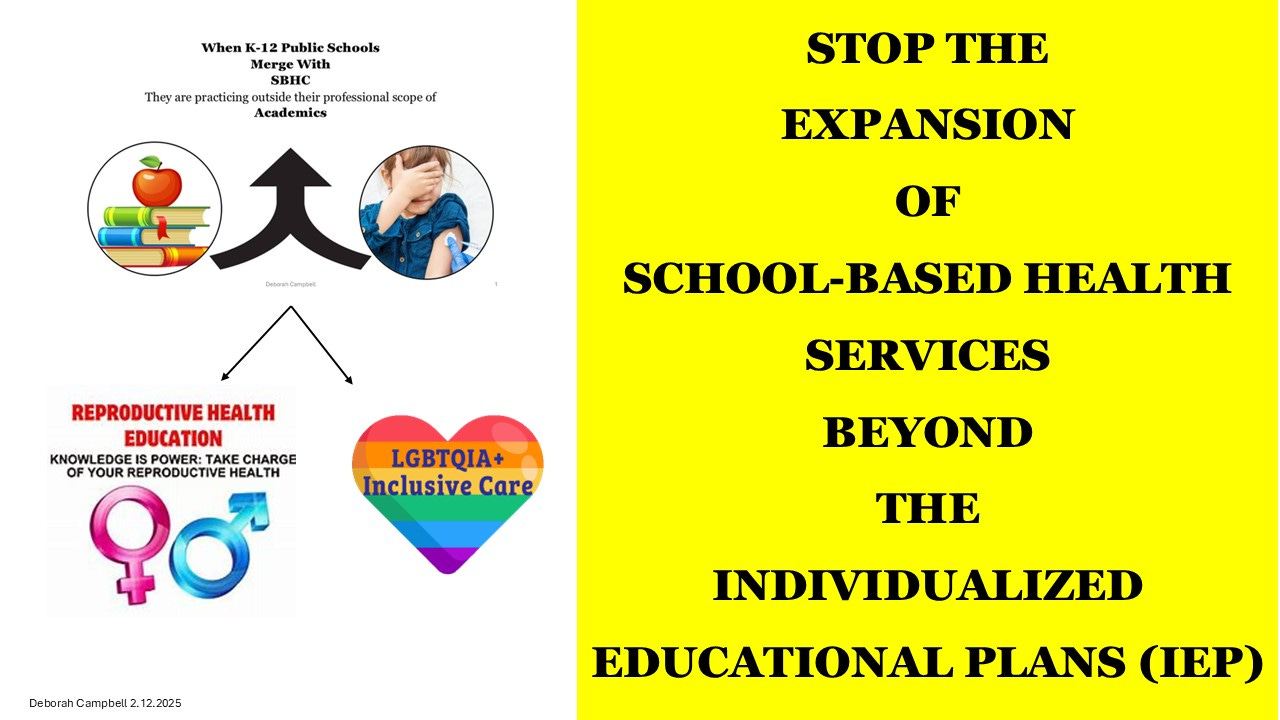
Had the parents and public done their due diligence, they would have discovered that SB1017 protected special education from the unlawful expansion of K-12 school-based services for the purpose of Medicaid primary health services for ALL students.
The Oklahoma State Constitution says there’s no constitutional right to school-based healthcare. In fact, the state constitution clearly states that the primary purpose of public schools is academics and free from sectarian control. There is no mention of state-funded healthcare clinics on K-12 public school campuses. Thus, SB 1017 was pulled due to the pushback due to ignorance.
On the subject at issue, I draw on my professional experience in special education law, as well as my experiences as a grandparent of an autistic grandson and a special education parent of two now-adult children.
Like most parents in special education, I just signed off on the Individualized Educational Plans (IEP) and consent documents. To put it another way, I didn't read the federal Individuals with Disabilities Education Act (IDEA). Why?
For the most part, public schools encouraged parents to have limited involvement in the education of their children because they were the authorities on my child's learning style and limitations. Because of this, I usually followed instructions without question. But as my daughter aged, I began to wonder if the label, placement, and low standards set for my daughter by the Baltimore County Public Schools were all suitable.
My daughter was classified as intellectually handicapped at the time by the IEP team. As my daughter grew older, I started to wonder to myself if her placement, IEP content, and label were suitable. Also, I questioned why I see a different child than what the IEP team saw. Until one day a specialist entered my life, which took me on an incredible journey; everything changed.
What motivated me to evaluate and research?
A specialist just happened to show up at the school for an appointment during my daughter's final year in the Infant Toddler Program. This expert saw my daughter playing with the other kids on the playground. The fact that my daughter's play and interactions were age-appropriate while the other kids were performing below her level attracted her attention. My daughter reminded the specialist of a child who is deaf or hard of hearing. She explained the typical delays in development and asked if my daughter’s hearing had been evaluated. I said no. The specialist arranged for my daughter to undergo testing at Johns Hopkins. Thus, Johns Hopkins Hospital determined that my daughter was deaf.
I began to speak out for my child as a parent after realizing how my inability to exercise my authority had hurt my child and allowed the IEP team total influence over all decisions. After conducting some study, I concluded that parents are the most important advocates for their children at this point, and I started to stand up for my daughter's needs. This was challenging because of opposition from the school administration. To advocate, I had to read the federal IDEA, research my daughter’s disability, and figure out her learning style. After that, I took control of my daughter's future and became a real member of the IEP team.
There’s more to my story, and I hope to share it in the future to assist parents and grandparents. As a result of my journey, I became a litigating paralegal in special education and later an independent contractor judge qualified in Maryland, Virginia, and Florida to litigate in administrative hearings concerning non-compliance with IDEA, Section 504, and the Americans with Disabilities Act (ADA).
Remember, parents have the sole responsibility, not the public schools, to meet the needs of their children. Public schools’ professional role is academics, not primary healthcare providers. The Oklahoma State Constitution and Title 210: 1-1-1 “…academics are the primary purpose of public schools…” Let public schools work in their professional scope and the primary healthcare industry stay outside of public schools.
To learn more about the unlawful expansion of K-12 school-based services and Medicaid school-based health centers/clinics, visit: https://open.substack.com/pub/nooklahomak12sbhc/p/rejecting-the-expansion-of-school?r=44v5na&utm_campaign=post&utm_medium=web&showWelcomeOnShare=false