

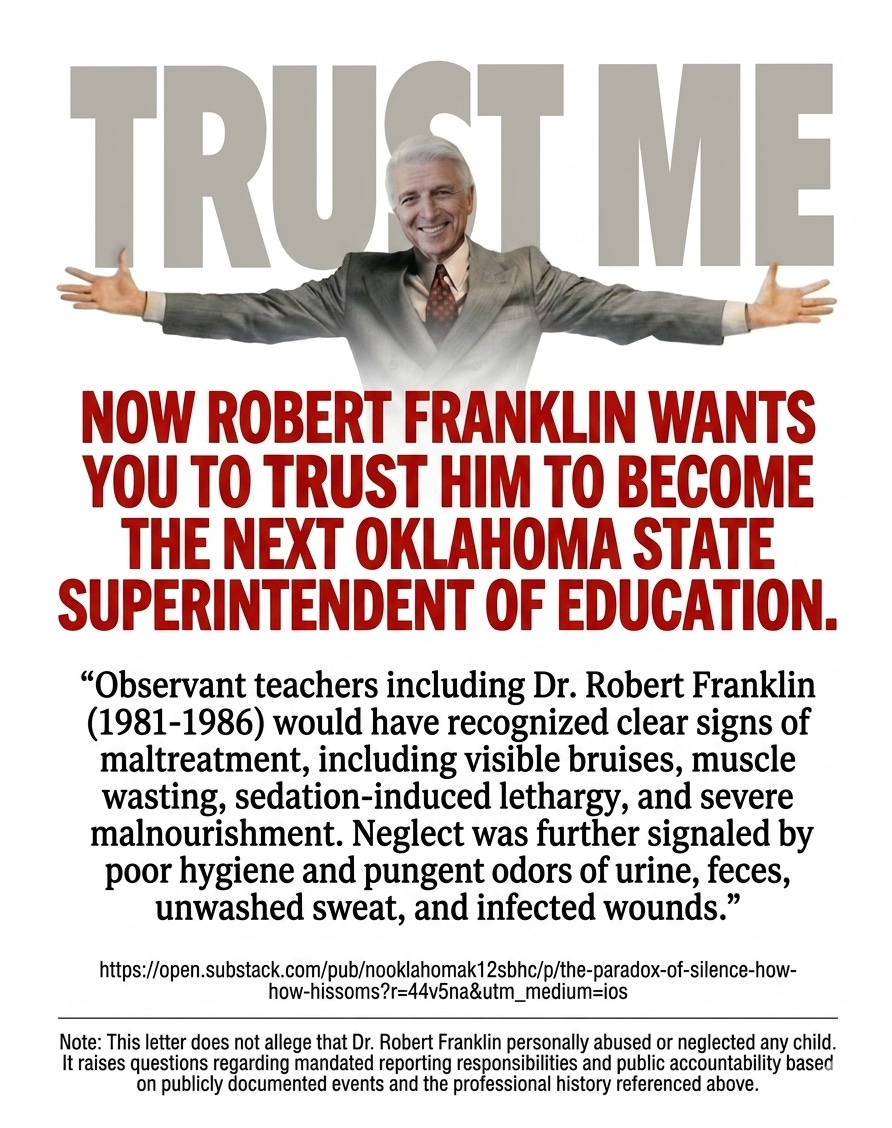
As Dr. Robert Franklin campaigns to become Oklahoma's next State Superintendent of Education, he is asking voters to trust him with the future of our children. But before we grant that trust, we must demand accountability. A look into Franklin's professional origins reveals a stark disconnect between public service longevity and institutional responsibility during one of the most severe abuse scandals in state history
Yet, an intriguing professional paradox arose from the landmark litigation. Despite the facility’s closure due to inhumane conditions, the teachers who worked there faced neither judicial consequences nor career repercussions. Instead, Hissom’s teachers cleanly transitioned into local public-school systems. Among them was Dr. Robert Franklin, who taught special education at Hissom for five years, from 1981 to 1986, before embarking on a respected, decades-long career in public school leadership.
Observant teachers, including Dr. Franklin, would have recognized clear signs of maltreatment. These included visible bruises, muscle wasting, sedation-induced lethargy, and severe malnourishment. Neglect was further signaled by poor hygiene and pungent odors of urine, feces, unwashed sweat, and infected wounds.
Hissom became nationally known because serious abuse continued for years before meaningful intervention occurred. While an unblemished employment or licensing record can exist alongside institutional failures, it leaves the public to ask whether legal and ethical responsibilities were truly fulfilled at the time.
A long career in public service does not, by itself, answer questions about actions taken during a documented institutional crisis.
Leadership is measured not only by years of experience but also by the willingness to protect vulnerable children when doing so is difficult.
Now, Robert Franklin is asking Oklahomans to trust him with the future of our state schools!
Note: This letter does not allege that Dr. Robert Franklin personally abused or neglected any child. It raises questions regarding mandated reporting responsibilities and public accountability based on publicly documented events and the professional history referenced above.